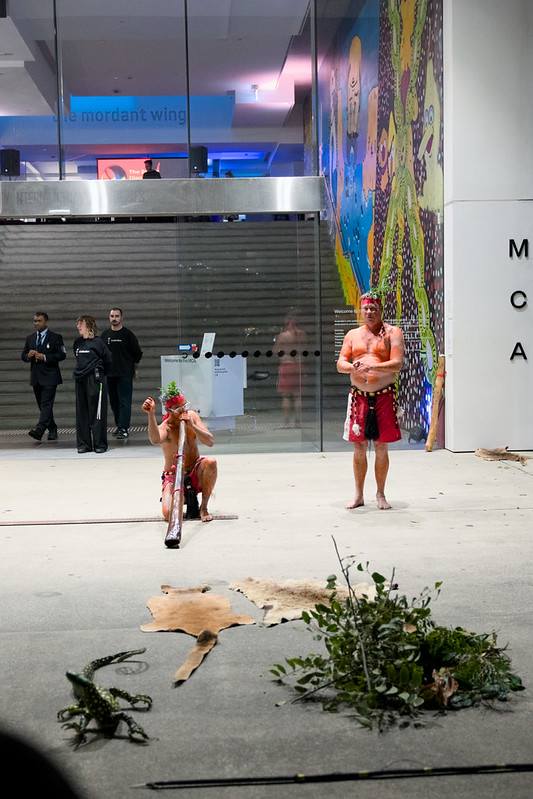
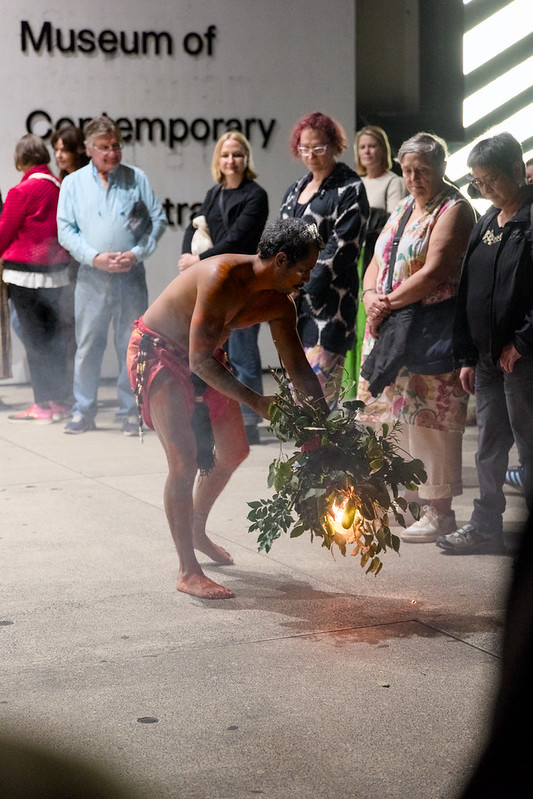
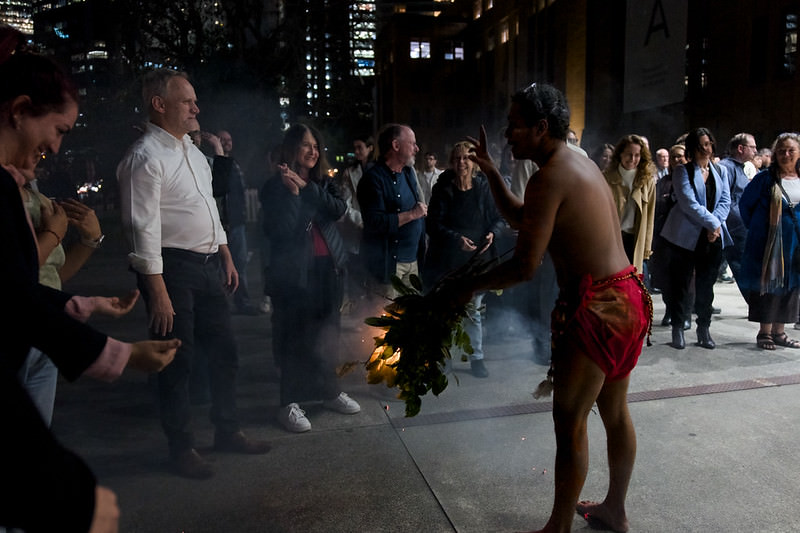
On a Friday evening, with DJs humming through the harbour-lit galleries, a hologram booth making its Australian public debut in the foyer, and a pop-up bar drawing a crowd that ranged from researchers to artists to the genuinely curious, it was hard not to feel that something more than a typical panel night was underway. But before entering the MCA doors, we were welcomed by a smoking ceremony performed by the Gadigal people of the Eora Nation, grounding the night in Country and acknowledging the traditional custodians of the land.
AI: Breakthrough or Breaking Point? — presented by the MCA and UNSW Centre for Ideas — was framed as a late-night festival of ideas. It delivered on that promise, though what stuck wasn’t the spectacle. It was the texture of the questions being asked.
The Exhibition at Its Centre
The evening was timed around Data Dreams: Art and AI, the MCA’s landmark group show — the first of its kind in a major Australian museum and part of the Sydney International Art Series 2025–26. Ten artists from across the globe were given the run of the galleries to interrogate AI not as a tool, but as a cultural and material force.
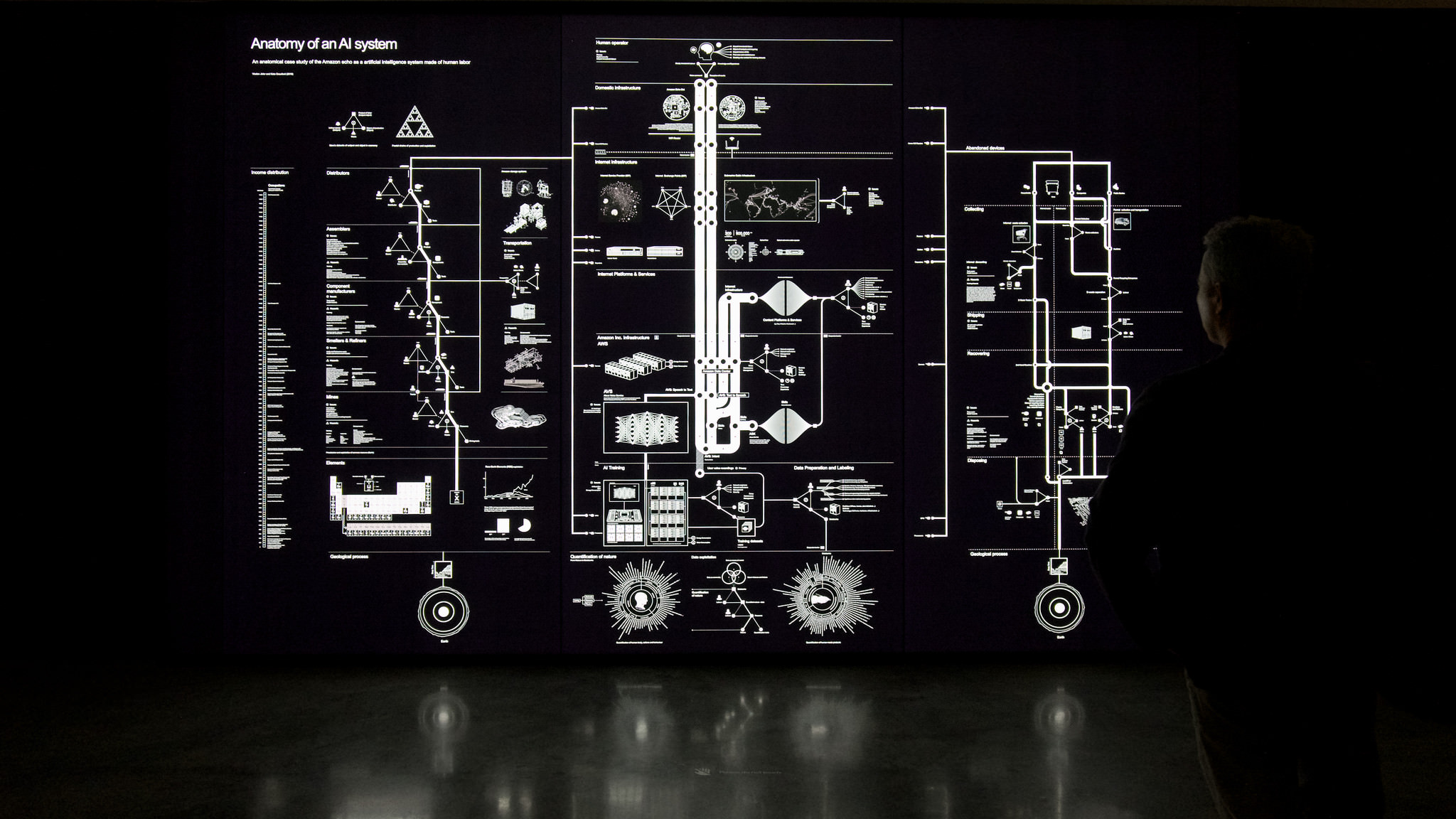
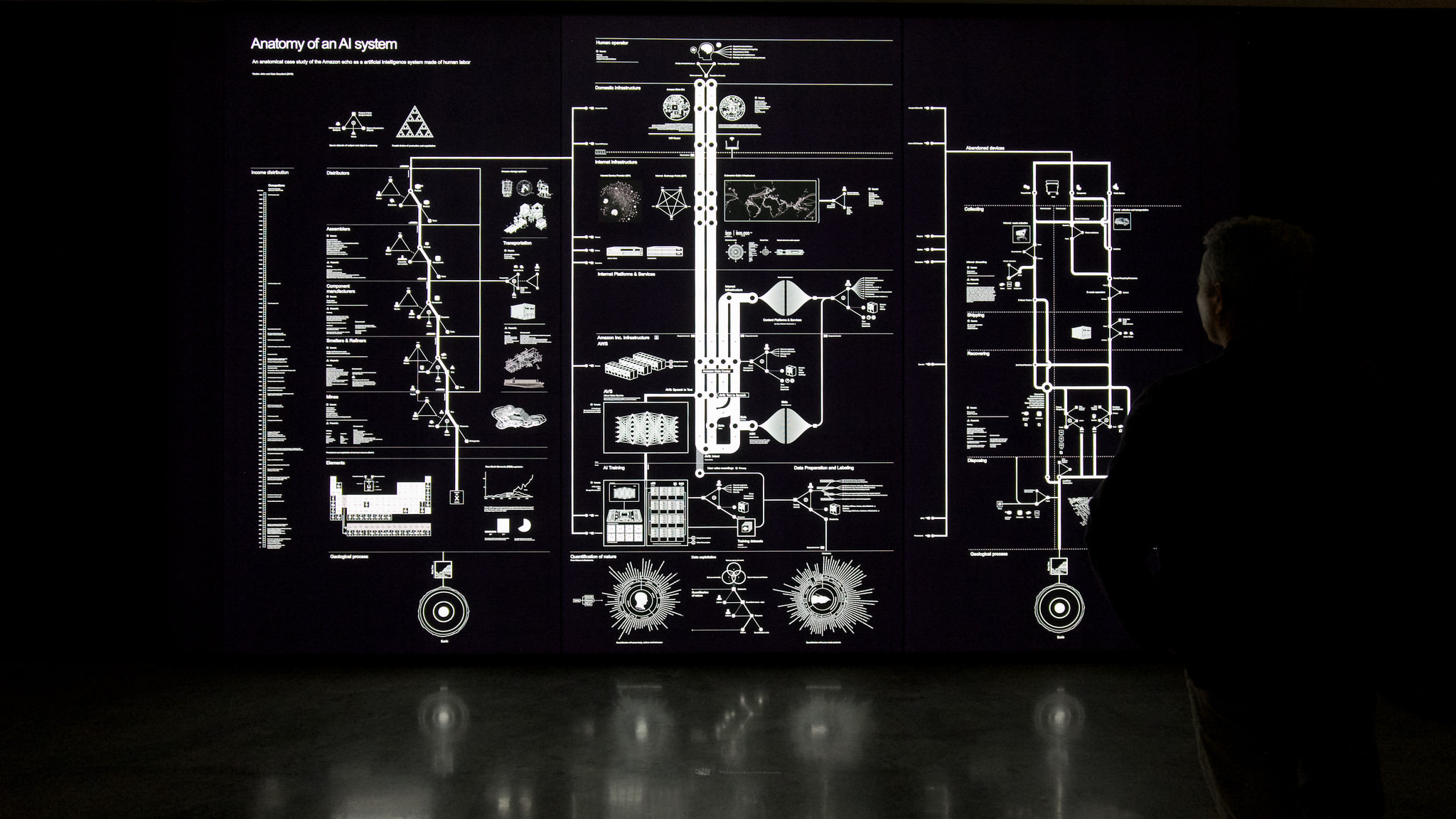
The works don’t offer easy positions. Kate Crawford and Vladan Joler’s Anatomy of an AI System — a monumental diagram centred on an Amazon Echo — maps the full planetary chain behind a single voice query: minerals extracted over geological time, data labour performed by invisible workers, and the device’s eventual return to Earth as pollution. The Echo itself sits dissected in a vitrine nearby, its circuit board exposed like a specimen. It’s one of those works that makes you put your phone in your pocket without quite knowing why. Download the detailed diagram as PDF at https://anatomyof.ai
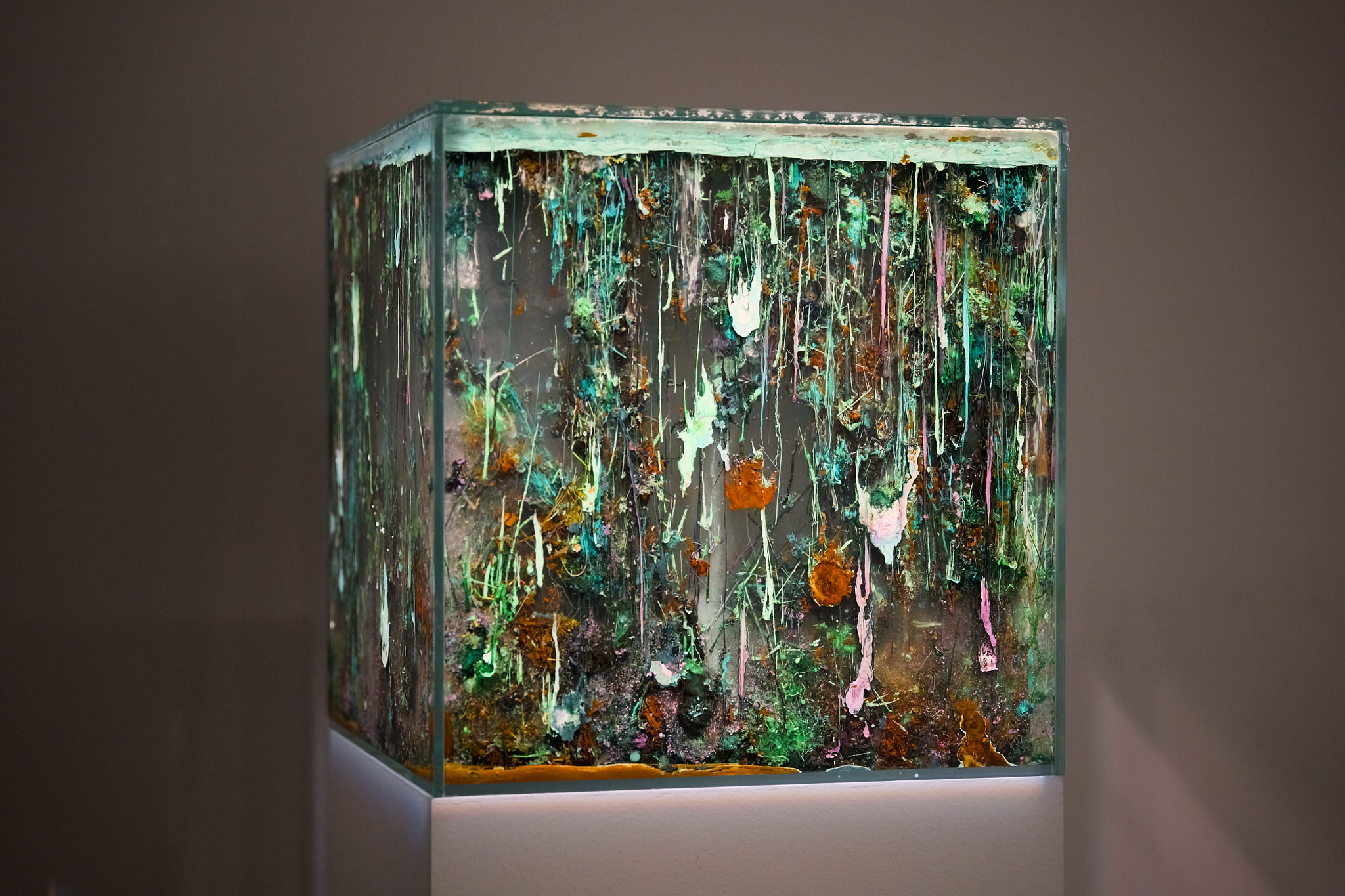
Agnieszka Kurant contributes two pieces. Chemical Garden grows vivid mineral formations inside a glass cube — the same metals used to manufacture computers, the same elements scientists believe sparked life near ancient hydrothermal vents. Conversions 5 takes a different approach: a copper painting that shifts and morphs in real time as an AI algorithm harvests the emotional sentiment of thousands of social media users. The painting, in other words, is a live portrait of collective feeling — and a commentary on surveillance capitalism that doesn’t need to say the phrase aloud.
Trevor Paglen’s Shadow (Corpus: Things that Exist Negatively) is from his Adversarially Evolved Hallucinations series — images generated by exploiting the fault lines and glitches in generative adversarial networks, drawn from datasets built around “omens and portents.” The results are toxic, uncanny, subliminal. His argument is quiet but pointed: machines can only approximate the richly symbolic nature of human seeing.
Palawa artist Angie Abdilla’s Meditation on Country may be the most quietly radical work in the show. Using machine learning to generate an audiovisual simulation that centres an Indigenous worldview of creation — drawing on Yuwaalaraay Elder Ghillar Michael Anderson’s oral histories of Baiame — Abdilla brings ancestral knowledge and astrophysics into resonance. Her position is clear: technology is a cultural practice, but machine learning can never replicate the profundity of creation. “Creation happens from vibration and resonance,” she says. “AI can never imitate.”
The Night’s Programme
The evening ran across three levels, with talks and performances unfolding in parallel.
Professor Joel Pearson opened proceedings with Neuro-Futures: Where Artificial Meets Intelligence, exploring the boundary between biological and machine cognition. In the lecture theatre, filmmaker Rodolfo Ocampo screened Human x Machine: Unlocking New Creative Possibilities, screened twice over the course of the night.
The most politically charged conversation came from Karaitiana Taiuru and Sue Keay — Guardians of the Future: Māori Knowledge in the Age of AI — examining what Indigenous data sovereignty means as large language models hoover up cultural knowledge without consent or attribution. The question of who owns the training data is abstract until it’s your ancestral stories being ingested.
Abdilla and Keay reconvened later in the Ambassador Lounge for Meditations on Country, extending that conversation into territory about what it would mean to build AI in genuine dialogue with Country and non-human worlds.
Charu Maithani closed the evening’s talks with Look Again: Why AI Images Don’t Tell the Whole Picture — a timely provocation given that the gallery upstairs is full of exactly those images.
The Performers
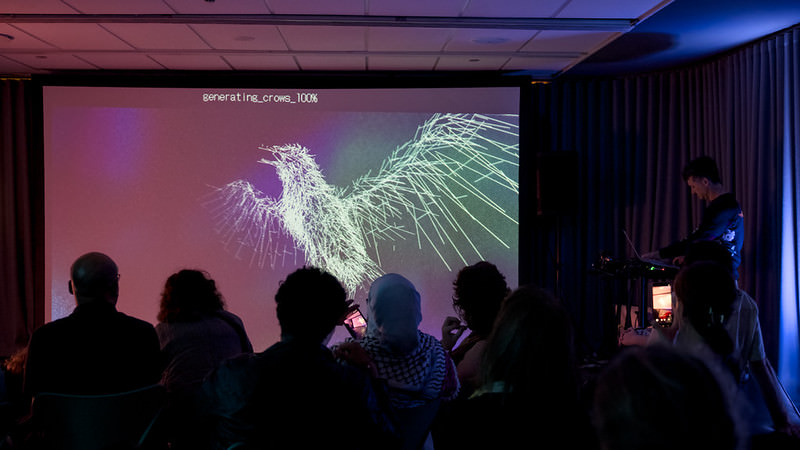
Sound artist salllvage (Rowan Savage), a proud Kombumerri man, closed the seminar room programme with a live mixed-media performance using the Interactive Visualiser AI model — transforming On Country field recordings of crows into electronica, bridging bush and dance floor, archive and algorithm. His broader project Sonic Mutations is a genuine attempt to hold those tensions without resolving them.
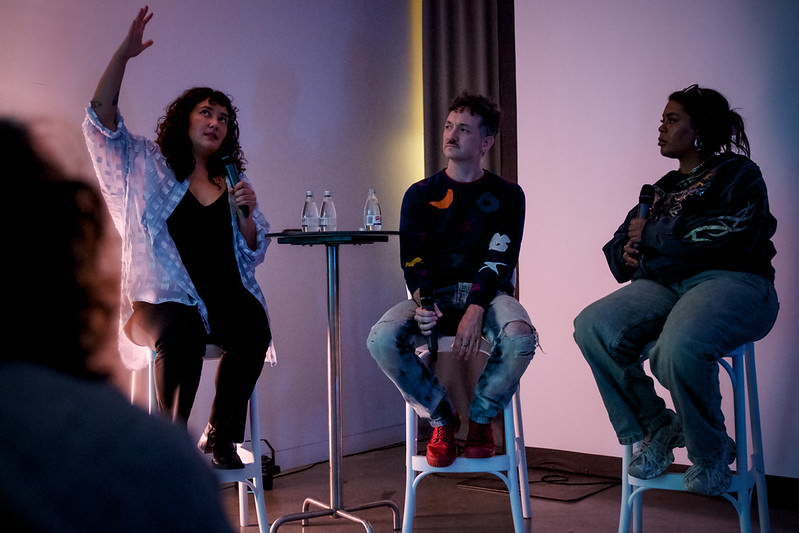
Alexis Weaver and Koup performed earlier in the evening on Level 1, while NikNak & Abstract Doll took the lecture theatre stage.
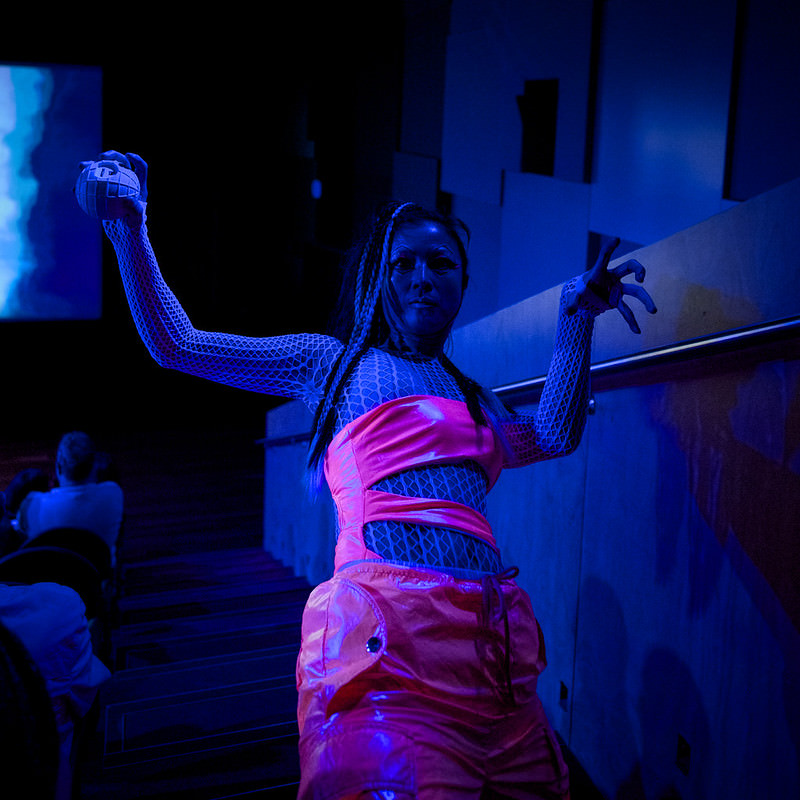
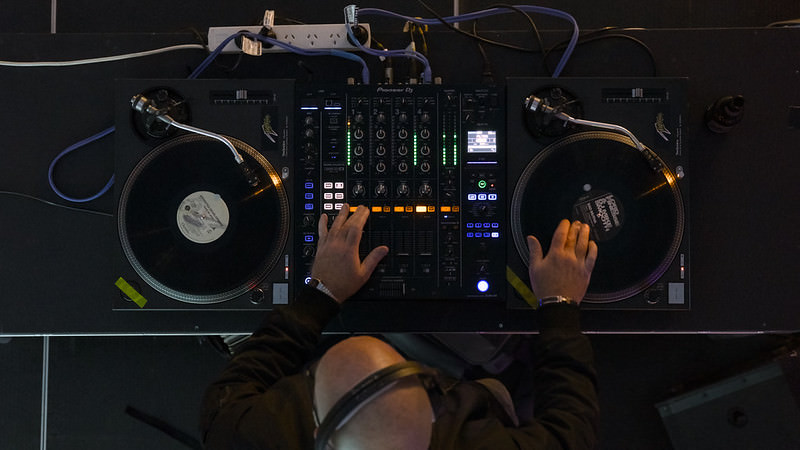
DJs pH and JMEZ kept the bar moving all night.
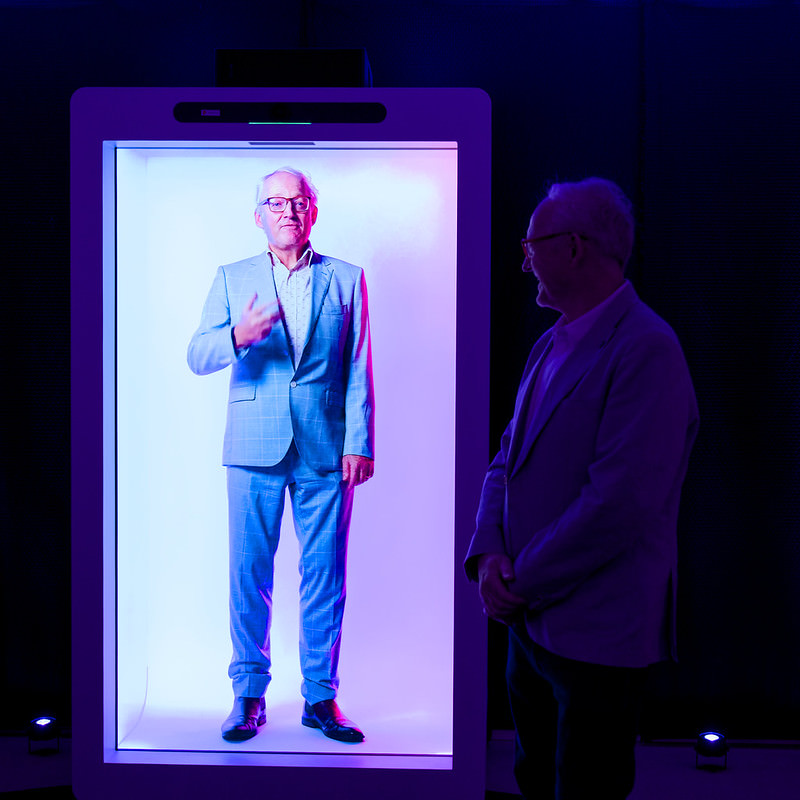
The hologram booth — featuring Professor Toby Walsh debunking AI myths, and artist Xanthe Dobbie guiding audiences into a post-truth world — was exactly what it sounds like: a gimmick with surprisingly good timing.
What Stayed
What lingers after AI: Breakthrough or Breaking Point? isn’t a verdict. The evening deliberately resisted offering one. What it did instead was make visible the questions that usually get smoothed over in the enthusiasm for product launches and productivity gains.
Who does the hidden work? Whose knowledge is being consumed? What is intelligence, really — and across what kinds of life forms and timelines? When an image is generated by a machine, what are we actually looking at?
The exhibition’s thematic clusters — Deep Time and More-Than-Human Perspectives, Emotional Systems: Relationships in the Age of AI, Illusions of Sentience: Humans Behind the Machine, Machine Dreaming: Visions and Hallucinations — are not just curatorial categories. They’re the shape of the conversation we need to be having.
Data Dreams: Art and AI continues at the MCA as part of the Sydney International Art Series 2025–26.